

Revealed: Who really has Nandy’s ear on the BBC
ScreenPower: where TV and Film meet politics and power

Hello – and welcome to ScreenPower. A newsletter about the UK’s screen industries, and their relationship with politics and power.
In today’s edition:
💥 REVEALED: Who Culture Secretary Lisa Nandy met with during her first year in the role, including:
Which broadcaster got the lion’s share of her time (and which got none)
Which streamer got more attention than Ofcom
And the surprising people who have Nandy’s ear on the BBC’s future
Plus
💥 Four things we’ve learnt about Donald Trump’s film tariff threat…
💥And an important development at DCMS for anyone in media…
Here goes… 📺📽️💪💥⚠️ 🇬🇧🇺🇸
Quiz question: Which 2002 Hollywood movie - named after a US city - famously wasn’t shot in the United States, but in Toronto? (Answer at the end of this email)
💥The Minister will see you now…(possibly)
I’ve been doing some digging into Government records of meetings that DCMS Ministers have with external organisations and individuals.
Why oh why? Two reasons. One, because all this data is publicly available. And two because I’ve been hearing lots of really mixed things from people in film and TV about engaging with (or trying to engage) with the Secretary of State for Culture, Media and Sport, Lisa Nandy.
Like what? It’s all anecdotal, so I’m reluctant to lean too heavily on it - but lots of people have complained to me that their organisation doesn’t get the kind of access to the Secretary of State that they’ve previously been used to. I’ve also heard reports of letters not replied to, and visits cancelled at short notice.
But it’s not all bad: I’ve also heard really positive things from some quarters about the Culture Secretary’s focus on specific issues.
So, not wanting to rely too heavily on personal experiences, I thought I’d look at the facts.
Official records: Government Ministers are required to publish details of meetings ‘with external organisations and individuals’ on a quarterly basis. The latest of these has just been published for DCMS, so I’ve trawled through the records of Lisa Nandy’s meetings from 1st July 2024 and 30th June 2025 - essentially her first year in office. Here’s what I learned:
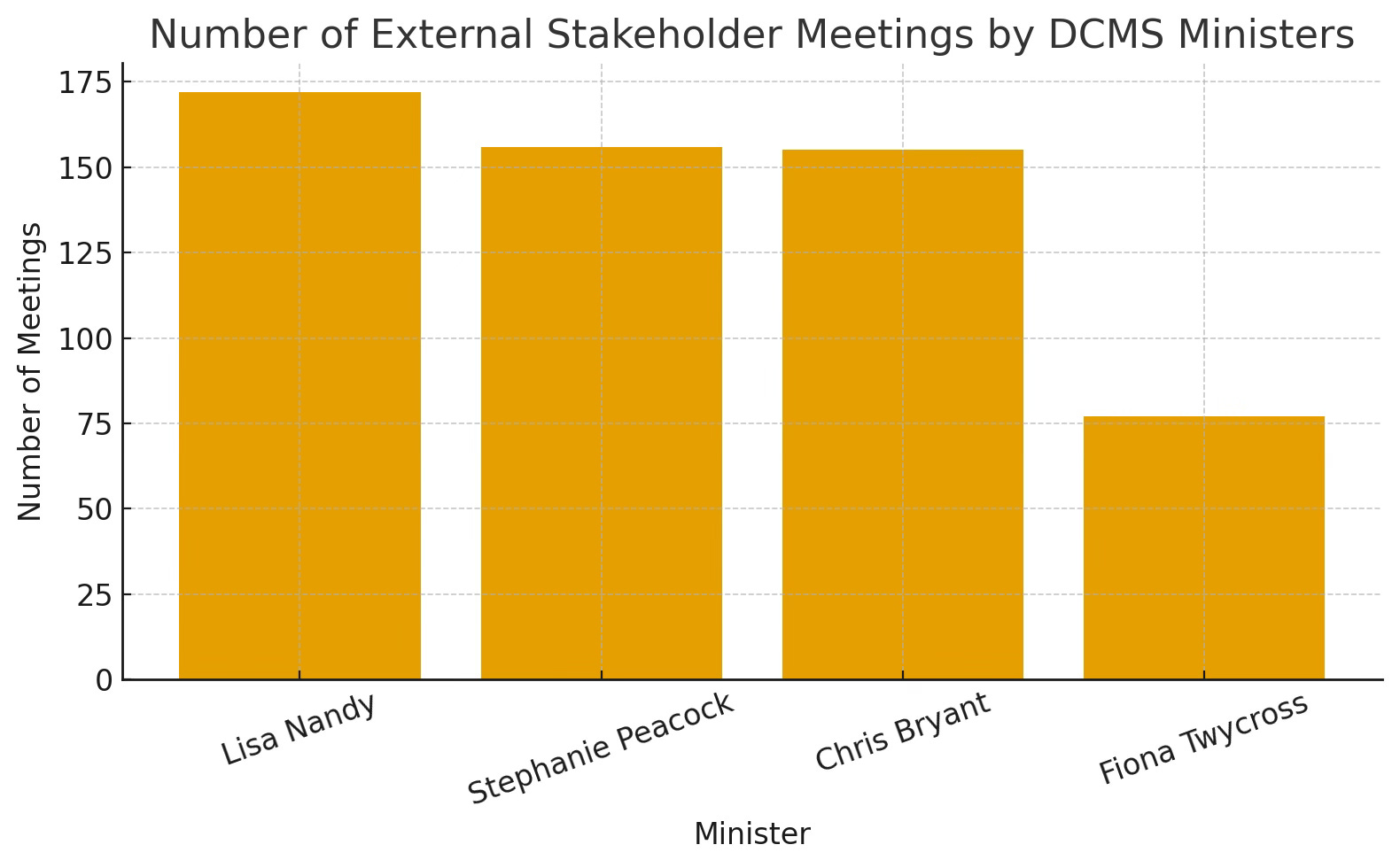
💥1. Nandy did more external meetings than any of her Ministerial colleagues at DCMS
Winning: Nandy held 172 external meetings over the year, compared to 156 for Stephanie Peacock, 155 for Sir Chris Bryant, and 77 for Baroness Twycross.
Screen focus: Nandy’s meetings cover a broad range of sectors, so for the rest of my analysis, I’ve focused on her meetings with the screen sector (about 40% of the total).
💥2. Nandy meets with PSBs infrequently…except for the BBC
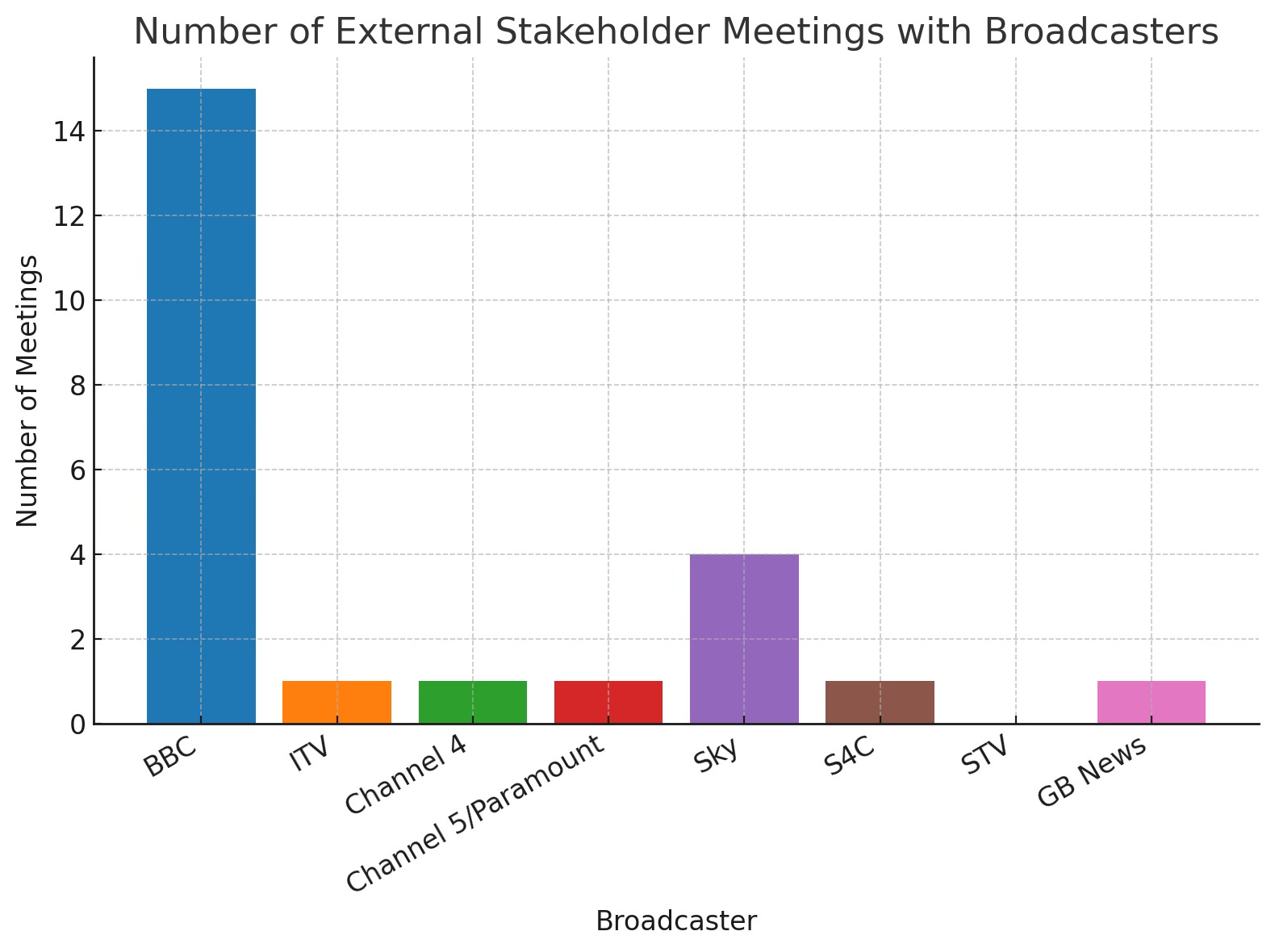
In her first year as Culture Secretary, Lisa Nandy met with representatives (in most cases the Chief Execs) of ITV, Channel 4, Channel 5, S4C and GB News once each. All of these took place last Autumn.
Big winners: But she met with Sky four times, and the BBC a whopping 15 times.
Time for Tim: While the records don’t always say exactly who she’s met with from a particular organisation, we do know that she sat down with BBC Director General Tim Davie four times.
Record Breakers: However, it’s BBC Chair Samir Shah who takes the prize for the most meetings with Lisa Nandy - having seen her seven times in her first year in the role.
Bob who? And remember this was all before the Glastonbury/Bob Vylan saga, so expect to see a bunch more meetings with the BBC around then, once the next set of records are released.
My take: It’s understandable that the BBC would get more meetings than other broadcasters - not least as they approach the Charter Review. But looking at the chart below, things do feel a little out of balance. Spare a thought for Scottish public service broadcaster STV, who appear to have been given the cold shoulder with zero meetings.
💥3. Half of the major US investors have been snubbed
Given the fact that US studios and streamers dominate spending on film and TV production in the UK, it’s important for a range of Ministers (including the Culture Secretary) to meet the heads of these companies.
Why? Because face time is important to provide confidence to the sector that the government is committed to maintaining a favourable environment for investment. It’s also important to have tricky conversations, e.g. about expectations around skills, diversity, and regional investment.
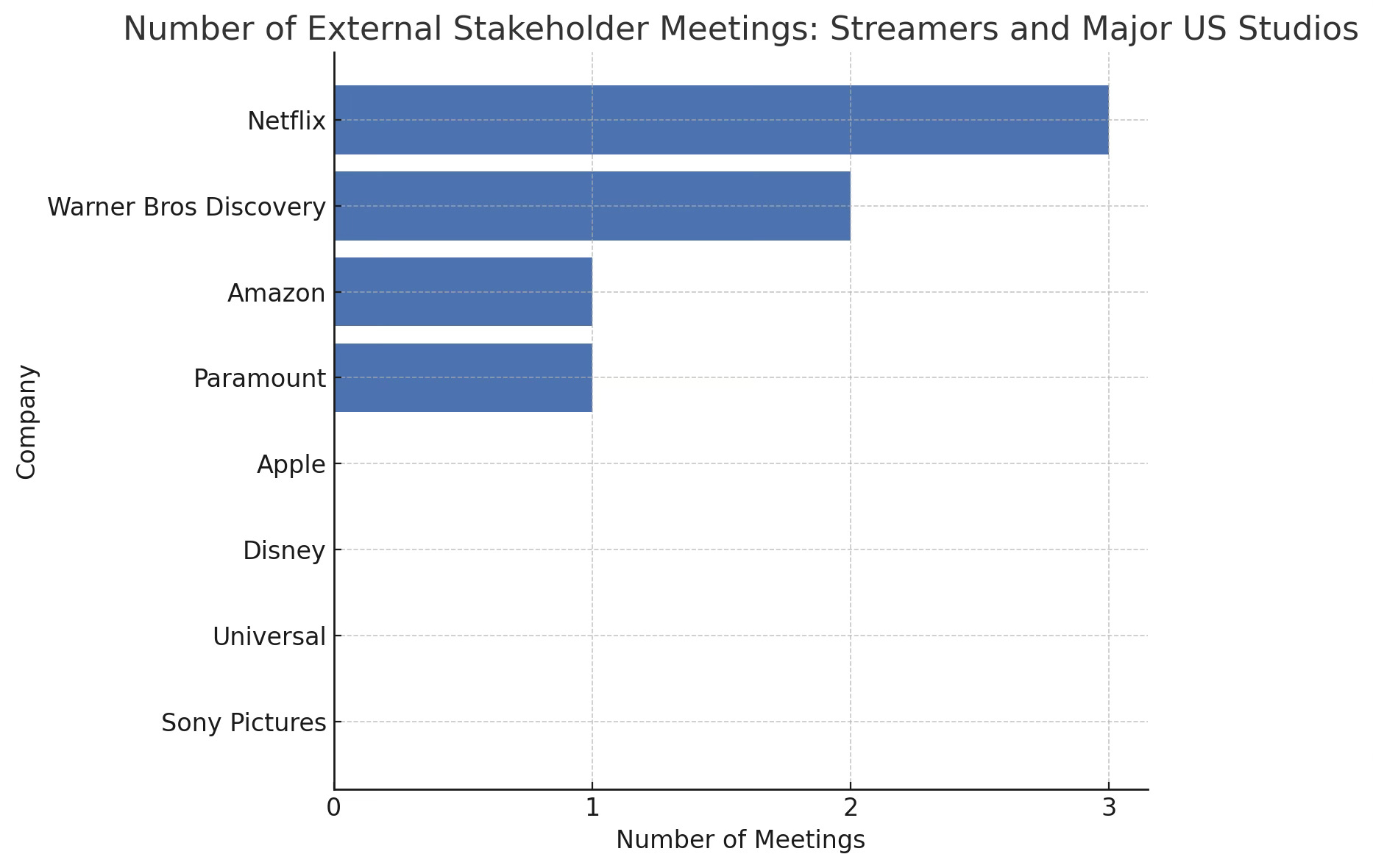
Winner: Of the five major US studios (Universal, Disney, Paramount, Warner Bros Discovery and Sony) - plus the major remaining streamers (Netflix, Amazon Prime and Apple TV+), Netflix comes out on top, having secured three meetings with the Secretary of State.
It’s the taking part that counts: Warner Bros Discovery had two meetings, and Amazon and Paramount each had one.
Shut out: But for some reason three major US studios - Disney, Universal Pictures and Sony Pictures - plus Apple, didn’t get a look in.
Spread the load: It’s worth saying that the meeting workload is spread between Ministers, and Sir Chris Bryant (who has now left DCMS) took lots of meetings with companies like this over the same period. But it’s still surprising that the Secretary of State would meet with Netflix three times (more than Ofcom, who she met with twice) - but not at all with other major US companies involved in Britain’s screen sector.
💥 4. The Culture Secretary is speaking to an interesting range of people about the future of the BBC
Helpfully, the public records provide a short description of what each meeting was about - and a bunch of them have been on the future of the BBC and the upcoming Charter Review.
But some of the people the Secretary of State is speaking to about the Charter Review might surprise you, including:
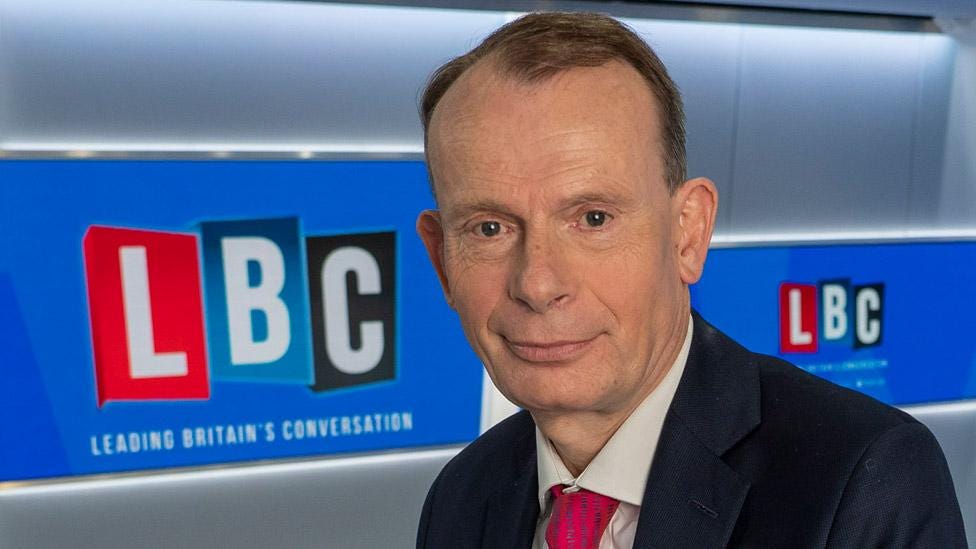
Broadcaster Andrew Marr (above) - who has previously defended the BBC’s universal access.
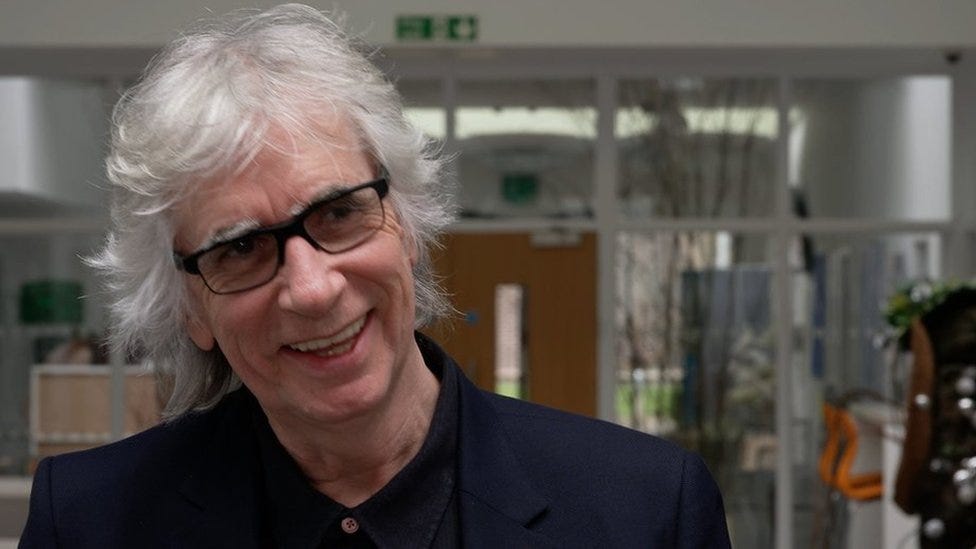
Screenwriting legend - and Hollyoaks and Brookside creator - Sir Phil Redmond (above), who last month called for the BBC to merge with Channel 4.
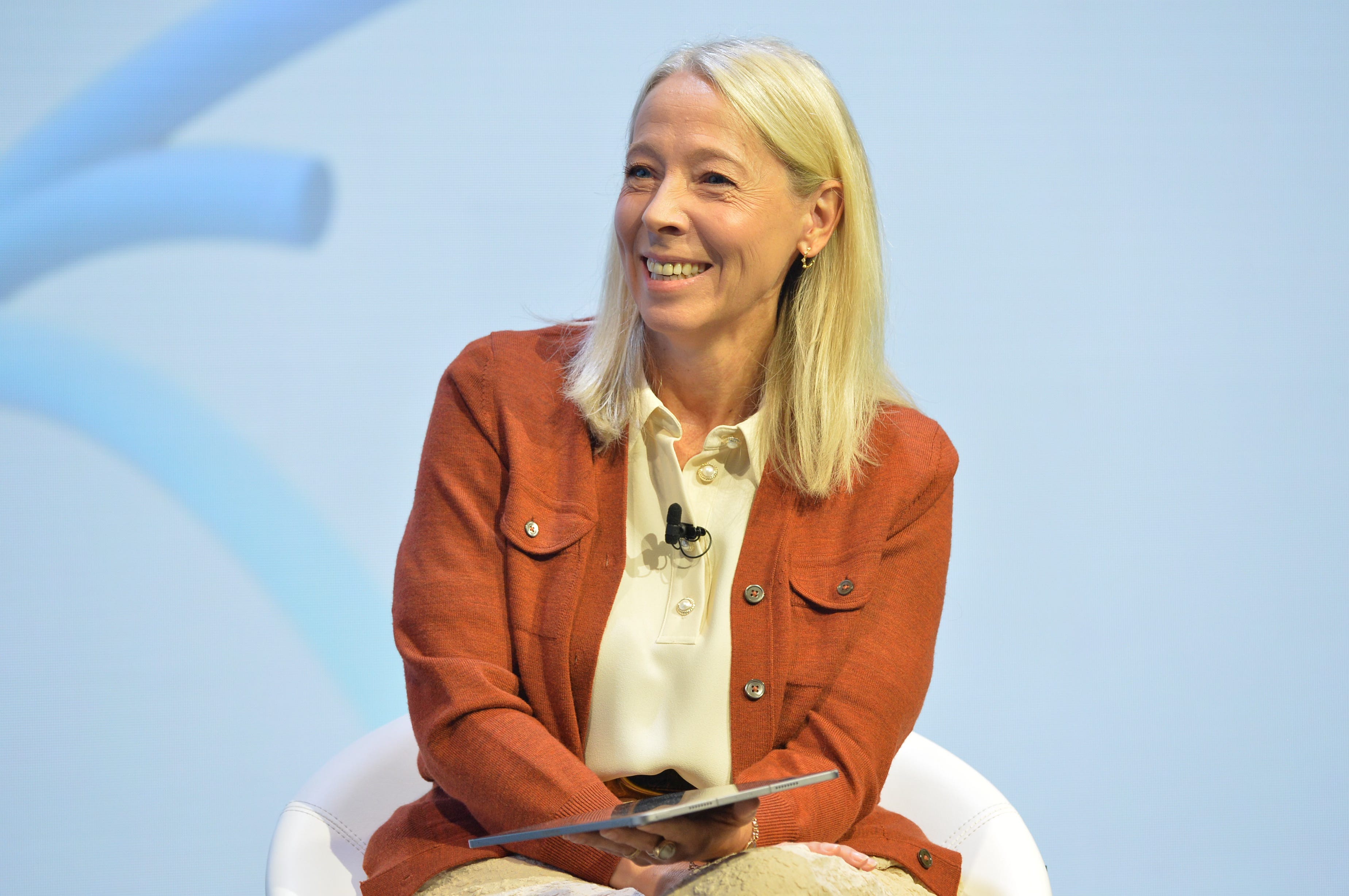
Top TV exec Jane Featherstone (above), who co-founded one of the UK’s leading indies, and is a globally respected producer of high quality international drama. Featherstone gave evidence to Parliament earlier this year about the BBC and other broadcasters being ‘priced out’ of producing high quality drama.
Enders Analysis - founded by Claire Enders, who has spoken previously about the value of the BBC ‘as a standard bearer of democracy’, and the importance of maintaining the licence fee model.

YouTube - Nandy held two meetings with YouTube during her first year, and one was specifically “to discuss the BBC Charter review” - which is kind of interesting. Tim Davie spoke in May about wanting to ‘dramatically’ increase BBC News coverage on platforms like YouTube.

💥 5. Other interesting bits
Nandy met with someone (unnamed) from online electronic retailer AO World in June, to discuss ‘youth issues’. That name may not mean much to you, but a few months later she appointed AO World’s Chair, Geoff Cooper, as the new Chair of Channel 4.
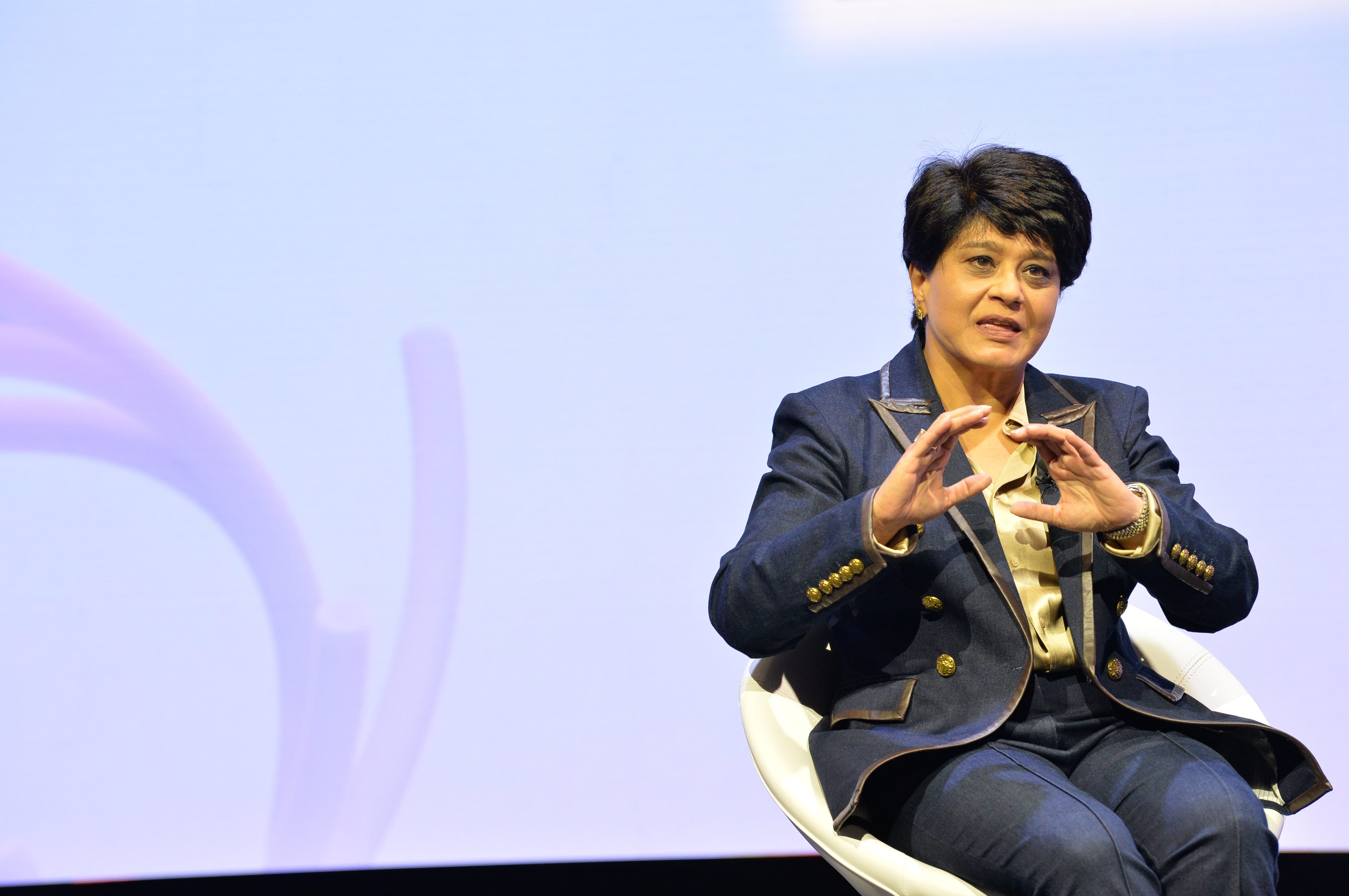
Baroness Shriti Vadera (below) met the Culture Secretary five times over the 12 months, which is encouraging since Vadera is a voice of reason on artificial intelligence and creativity. She spoke at last months RTS convention about how she “completely disagreed with the Government’s position on copyright and the free scraping of content” (full ScreenPower write-up here). Vadera is the incoming Chair of the Creative Industries Council - and hopefully she can continue to make her voice heard in Whitehall.
Nandy met with the new Creative Industries Independent Standards Authority twice, demonstrating her commitment to the body set up to uphold and improve standards of behaviour across the creative industries. This backing is important, given some of the reported industry challenges being faced by CIISA.
The Culture Sec also met with a number of other significant bodies including the British Film Institute (three times), Creative UK (twice), BAFTA, creative industries union BECTU, Pinewood Studios, and embattled actors union Equity.
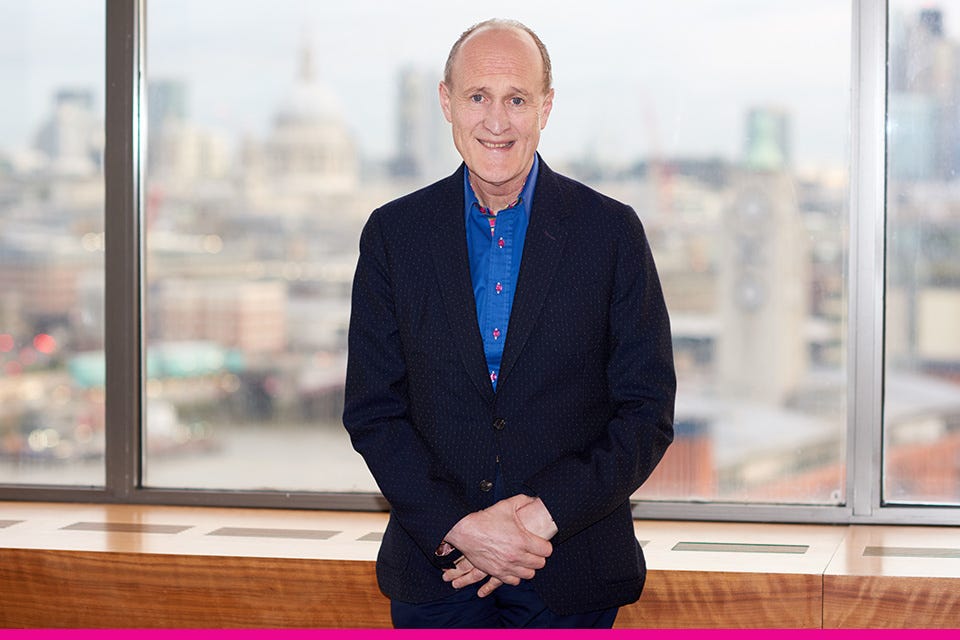
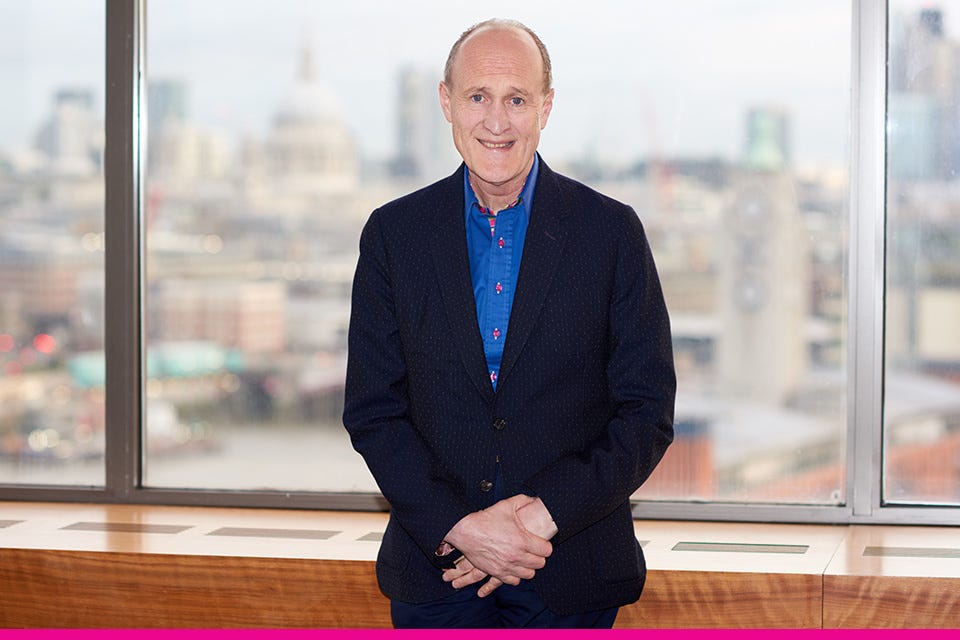
TV Grandee and outgoing Chair of the Creative Industries Council Sir Peter Bazalgette (above) made it into the diary four times.
And it’s encouraging to see that the video games sector is starting to get the attention it deserves in Westminster. She held four meetings with the industry over the year, including UKIE (the sector trade body) and Nintendo.
Take a step back: What does all this mean?
The data - in aggregate - doesn’t quite match the reports about the Secretary of State failing to engage. Nandy is engaging, but not with everyone. She is choosing to spend her time on certain policy areas, like the BBC (football also featured heavily in the non-screen sector stats).
But there are some surprises in what the stats reveal about Nandy’s priorities. For example that she’s met with Youtube more than any PSB apart from the BBC. Or that she met with Netflix more than Ofcom.
Or maybe that isn’t surprising. Perhaps it just reflects a changing world, given YouTube and Netflix now dominate what we watch.
Rest assured: I’ll be returning to this as more data emerges, and keeping a tab on who’s getting face time.
👌A Media Merger that Makes Sense
In other policy news, I’m delighted to see that the Department for Culture, Media and Sport have taken ScreenPower’s advice - and rejigged Ministerial roles there.
Recap: Before the election, the Media and Creative Industries briefs were held by the same Minister. That made a lot of sense, since many media organisations are also deeply embedded in the creative industries (e.g. the BBC).
Separated: But the role was split after the election, with Chris Bryant handing the Media brief to Stephanie Peacock. I wrote last month that it was a missed opportunity not to revert to the old model.
Hooray: The Department have now recombined the responsibilities in the person of Ian Murray (below) who became Minister of State at DCMS last month in what seemed like more of a kerfuffle than reshuffle.
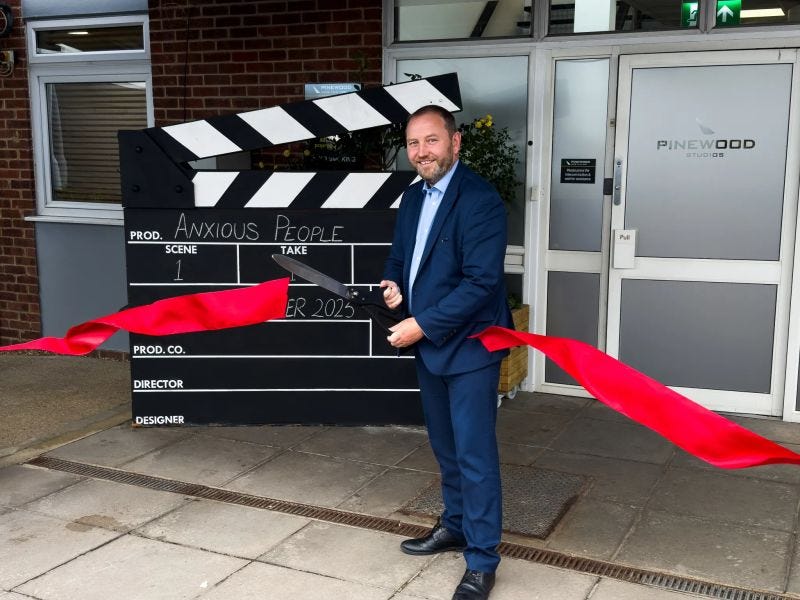
Murray seems to be settling in to his new role well. Just days into the job, he opened Pinewood Studios’ new Indie Film Hub (above).
Still work to do: However, while Murray is now Minister for Creative Industries, Media and Arts at DCMS, he is also the Minister for Digital Government and Data at the Dept for Science, Innovation and Technology. I struggle to see how this makes sense now that the digital ‘D’ has been removed from ‘DCMS’. These are massive briefs - with little crossover - and they deserve focus.
We fight on…👊
🇺🇸Film tariffs: the four things we learned from Trump’s latest post
US President Donald Trump’s latest pronouncement on the topic of film tariffs hasn’t got as much attention as when he first started talking about this back in May.
That might be because the sentiment is so similar. Here’s his full ‘Truth Social’ post from Monday this week:
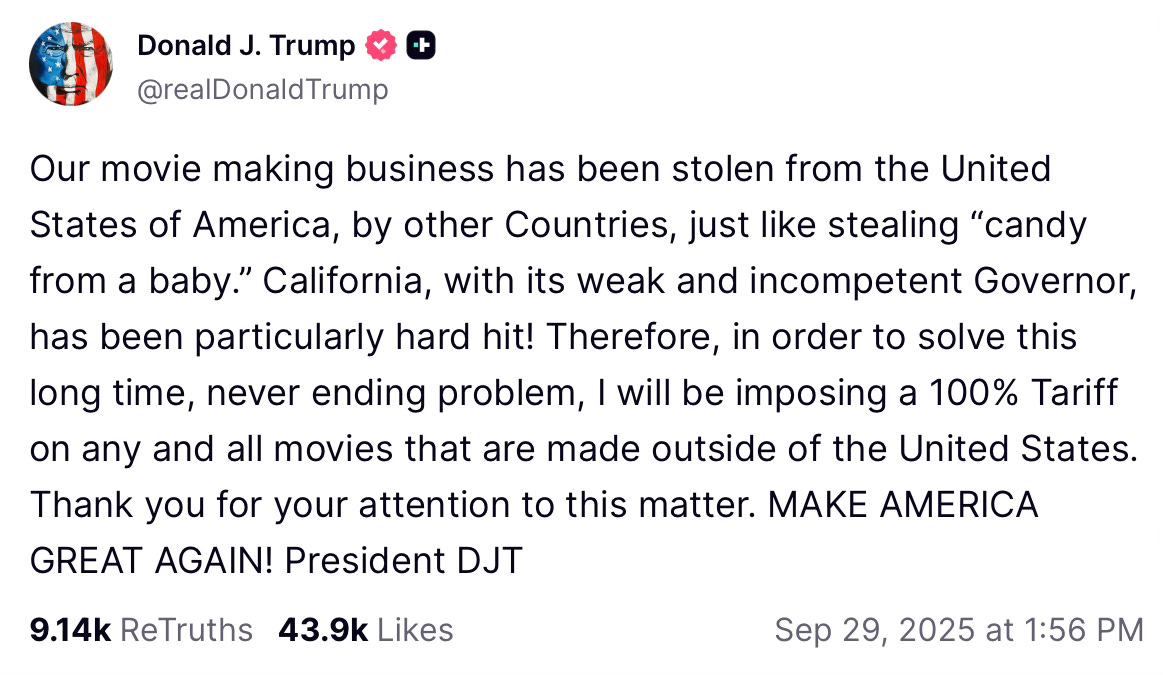
But while Trump’s latest post doesn’t substantively cover new ground, it does tell us a few important things:
It suggests that no progress has been made since he last posted about this in May. Back then, the screen industry went into panic mode about what the President might mean and what his intention might be. There was relief when he promised to spare James Bond - and there was an assumption that work was going on behind closed doors somewhere in Washington to devise a plan to meet the spirit, if not the letter, of Trump’s promise. It doesn’t seem like that has happened - and hence perhaps the increased frustration and stronger language in this latest outburst (e.g. accusing other countries of ‘stealing’, is new).
The policy objective here (to onshore more US film and TV production) still appears to be based on a fundamental misunderstanding of the dynamics of this highly mobile industry. It is not that other countries are ‘stealing’ productions - it’s that US productions are choosing to shoot in countries with more attractive offers (mainly, but not exclusively, because of tax incentives).
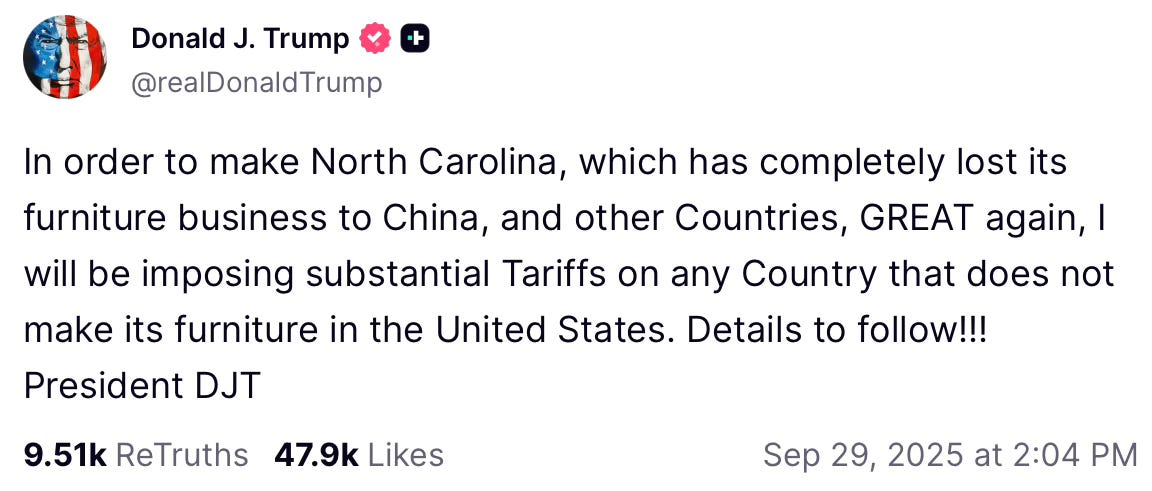
It’s more obvious now that this is, partly at least, politically driven. Trump is directing his ire at California’s Democratic Governor Gavin Newsom, perhaps laying the groundwork for 2028. But Newsom isn’t the only one. Shortly after posting about film tariffs, Trump was posting about furniture - again targeting a Democrat-led state:
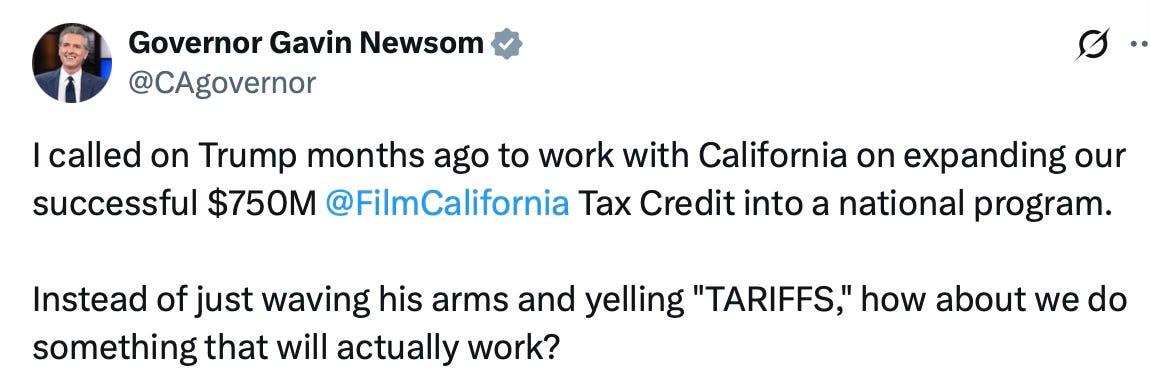
Finally, this is still on the US President’s radar (albeit sporadically) and it doesn’t seem to be going away. It’s also unlikely to go away unless either the major studios can satisfy Trump that they take his concerns seriously (i.e. some sort of demonstration that they will commit to more production in the US, with obvious consequences for countries like the UK) - or action is taken by Government to make it more attractive to shoot in the US. Governor Gavin Newsom has already increased the cap on California’s tax incentive - and is now calling on the President to introduce a federal incentive:
So, this isn’t over yet.
Thank you for your attention to this matter. 🙏
📺 What to watch…
I normally recommend something great to watch in this slot. But I’ve been so busy the past two weeks, I’ve barely had chance to watch anything except the news. I don’t even know where the remote is.
So please give me your recommendations! I’m keen for a series to get into - but also love a good film rec (nothing over two hours - it shouldn’t be allowed). Good suggestions get a shout out.
That’s all for this week
Thank you for reading ScreenPower. As ever, do get in touch with any comments or questions on the topics covered in this issue, either by replying to this email or by connecting on LinkedIn.
And if you know someone who might enjoy this newsletter - why not forward it to them? It’s free!
Quiz answer: The 2002 film Chicago was filmed almost entirely in Toronto, Canada - demonstrating how flexible and mobile the film industry is. #NobodyTellTrump